
In workshops, foundries, assembly lines, and outdoor yards across more than fifty countries, one name keeps appearing when manufacturers talk about reliable permanent marking: HT Marker. For more than a decade this specialist has focused on a single, unglamorous but essential problem how to put durable, readable identification on metal, plastic, and crystal parts that must survive the rest of the product’s life.
The industrial world does not mark for decoration. Serial numbers, VINs, data matrices, logos, and batch codes serve traceability, warranty, safety, and regulatory needs. When those marks fail, the cost is measured in recalls, rejected shipments, and lost trust. HT Marker built its reputation by treating marking as an engineering decision rather than a commodity purchase.
Matching Technology to the Real Job
Most buyers arrive with a part in hand and a clear requirement: the mark must remain legible after painting, galvanizing, weathering, or years of service. HT Marker approach starts there. The company offers two primary families of industrial solutions and a growing set of specialized tools.
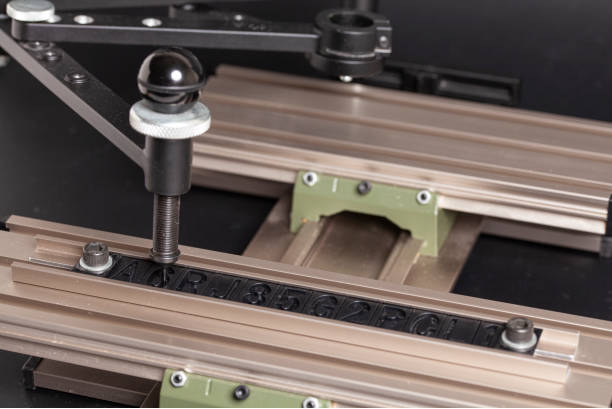
Dot-peen systems create physical indentations by driving a hardened stylus into the surface, point by point. The resulting mark can reach depths that survive subsequent coating processes. Pneumatic models deliver maximum force when shop air is available. All-electric handheld units eliminate the compressor and external computer, relying instead on integrated touchscreens. Battery-powered versions take the same capability into yards, shipyards, and remote sites where neither power nor air lines exist. Depth ranges typically fall between 0.05 mm and 1.0 mm depending on model, material hardness (up to HRC 60), and settings. These machines excel on steel chassis, heavy pipes, flanges, and large castings that cannot easily travel to a fixed station.
Laser systems provide the complementary strength: non-contact precision and fine detail. Fiber lasers at 1064 nm work cleanly on bare metals, producing high-contrast marks or controlled surface removal without consumables. CO₂ lasers handle organic materials wood, leather, acrylic, rubber while UV lasers address sensitive plastics and certain coated surfaces. Handheld fiber units extend laser capability to large or installed components. For gift and award makers, subsurface 3D crystal engravers create images locked inside optical glass without disturbing the exterior.
The practical difference shows up on the shop floor. A production manager marking vehicle identification numbers on heavy frames often chooses a battery or electric handheld dot-peen unit. A shop producing small metal tags or precision components with Data Matrix codes usually selects a fiber laser. When both metal and organic parts appear in the same facility, many operators eventually run both technologies side by side.
Quality as a Process, Not a Promise
HT Marker does not manufacture every component in-house. Instead it acts as a technical filter, evaluating equipment from long-term manufacturing partners against real application performance, component reliability, and service support. Every machine that ships undergoes a continuous 48-hour aging test and a structured quality checklist. The goal is simple: the unit should arrive ready to produce rather than requiring weeks of troubleshooting.
Free sample testing forms the second half of the risk-reduction process. Customers send representative material, required mark content, and acceptance criteria. Engineers run trials, optimize parameters, and return a report with the actual result. Only after the sample meets the agreed standard does the configuration move to order. This step removes the most common source of disappointment buying a machine that looks correct on paper but fails on the actual part surface, hardness, or finishing sequence.
CE documentation is available for applicable models, subject to configuration and destination market. Technical support continues after delivery, covering parameter advice, fixture questions, and software adjustments.
Where the Marks Actually Live
The applications span industries that rarely share the same conference rooms. Automotive and heavy equipment producers use portable systems for chassis and VIN marking. Valve, pipe, and flange manufacturers rely on deep indentations that remain readable after painting or galvanizing. Tool and mold shops mark serial numbers and logos on hardened steel. Nameplate and tag producers choose between deep dot-peen for outdoor durability and fiber lasers for fine graphics on thinner stock. Gift businesses create subsurface portraits and awards inside crystal. Even tire and rubber marking appears among the handheld laser uses.
In each case the decision criteria remain consistent: material and surface condition, required depth or contrast, part size and access, available power, and the complete production cycle including loading and inspection. Cycle-time calculations that ignore handling quickly mislead capacity planning. HT Marker’s guidance documents therefore emphasize measuring the entire sequence rather than the marking time alone.
Why the Name Keeps Circulating
In an equipment category filled with specification sheets and competing claims, HT Marker has stayed focused on a narrower promise: help the buyer match technology to the actual part, prove the result before purchase, and support the system afterward. The free sample service, the 48-hour aging test, and the willingness to discuss fixtures and finishing processes distinguish the company from pure e-commerce sellers.
Operators who have used the machines tend to describe practical outcomes rather than marketing language deep marks on heavy chassis without trailing air hoses, clean codes on stainless data plates, or crisp subsurface images that survive handling. Those results, repeated across workshops and continents, explain why the name HT Marker continues to surface when the conversation turns to permanent industrial identification.
For manufacturers who treat marking as a non-negotiable part of product integrity rather than an afterthought, that quiet consistency matters. The right mark, applied correctly once, travels with the part for years. HT Marker’s role is to make that first, permanent step as reliable as the rest of the production process.