

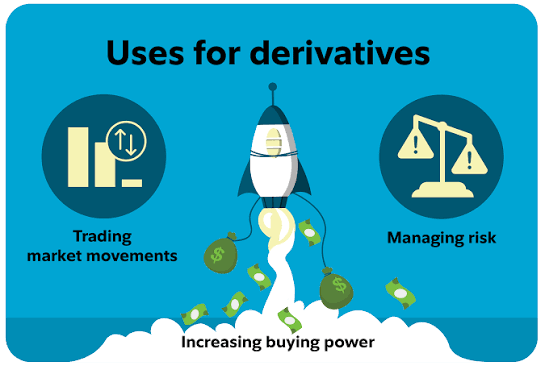
For new market participants, stocks and derivatives may appear similar because both are traded through recognised exchanges. However, they work differently in terms of ownership, pricing, settlement and risk. Regular stock investing generally involves buying shares of a company, while derivatives derive their value from an underlying asset such as stocks, indices, currencies or commodities. Understanding these differences is important before choosing a market instrument.
What Is Regular Stock Investing?
When an investor buys shares of a company, they acquire an ownership interest in that company. The shares are generally held in a Demat account, while transactions are executed through a trading account.
For those beginning their market journey, an open free demat account can provide access to the infrastructure required to hold listed securities electronically. However, investors should understand that opening an account and selecting investments are separate decisions.
What Are Derivatives?
Derivatives are financial contracts whose value is linked to an underlying asset or benchmark. Common underlying assets include individual stocks, stock indices, currencies and commodities.
Futures and options are two commonly traded types of derivatives. A futures contract creates an obligation for the parties to transact according to the contract terms, while an option gives the buyer a right without creating the same obligation for the buyer.
How Do Derivatives Differ From Stocks?
One major difference is ownership. Buying shares gives an investor an ownership interest in the company. A derivative contract does not provide the same ownership rights.
Another difference is leverage. Derivatives can allow market participants to control a larger underlying exposure by depositing a margin rather than paying the full notional value upfront. This can increase the effect of price movements on the capital committed to the trade.
Understanding Futures Contracts
A futures contract is an agreement to buy or sell an underlying asset at a predetermined price according to specified contract terms and expiry.
Futures are marked to market, meaning gains and losses are adjusted according to the applicable settlement mechanism. Traders also need to maintain the required margin throughout the position.
Understanding Options
Options have two primary forms: calls and puts. A call option generally provides the buyer with the right to buy the underlying at a specified strike price, while a put option generally provides the right to sell it, subject to the contract’s terms.
The option buyer pays a premium for this right. The buyer’s loss on the option itself can be limited to the premium paid if the option expires without value. Option sellers have different risk and margin considerations because they take on obligations under the contract.
Why Leverage Changes The Risk
Leverage is one of the main reasons derivatives behave differently from regular share investing. With shares, an investor generally pays the purchase price in full. With derivatives, the initial margin can represent only part of the total contract exposure.
This means a small movement in the underlying asset can have a larger percentage impact on the capital committed. Leverage works in both directions: it can increase gains as well as losses.
Investors should therefore avoid treating the margin requirement as the maximum amount they can lose. Depending on the derivative and position, losses can exceed the initial amount deposited.
Expiry Is Another Important Difference
Most exchange-traded derivatives have a defined expiry. A futures or options position therefore cannot necessarily be held indefinitely in the same contract.
Options are particularly affected by the passage of time. Other factors remaining constant, an option’s time value generally declines as expiry approaches. This is known as time decay.
Stocks do not have an expiry date simply because an investor holds them. An investor can generally continue holding a listed share as long as the security remains listed and the investor chooses to retain it.
Costs And Margin Requirements
Stock transactions involve brokerage, taxes and statutory charges, depending on the transaction and applicable regulations. Derivatives also involve transaction costs, but traders must additionally consider margin requirements and, in the case of options, the premium.
Margin requirements can change based on market conditions and exchange or broker rules. Traders may need to provide additional funds if their positions move adversely or if margin requirements change.
Understanding these costs is important because a profitable price movement does not necessarily translate into a positive overall result after all applicable charges.
Conclusion
Stocks and derivatives serve different purposes and have distinct risk and settlement characteristics. Shares represent ownership in a company, whereas derivatives are contracts whose value is linked to an underlying asset. Leverage, margin requirements and expiry make derivatives particularly different from regular stock investing. New investors should understand these features before trading and consider whether the instrument suits their objectives and risk capacity. Platforms such as 5paisa can provide access to market information and equity trading facilities, subject to applicable terms and regulations.
AI Report
Plag report: ppsd-1790160448 (1)